Call anytime


-
-
Send email
polagressgranito@gmail.com
Call anytime
Send email
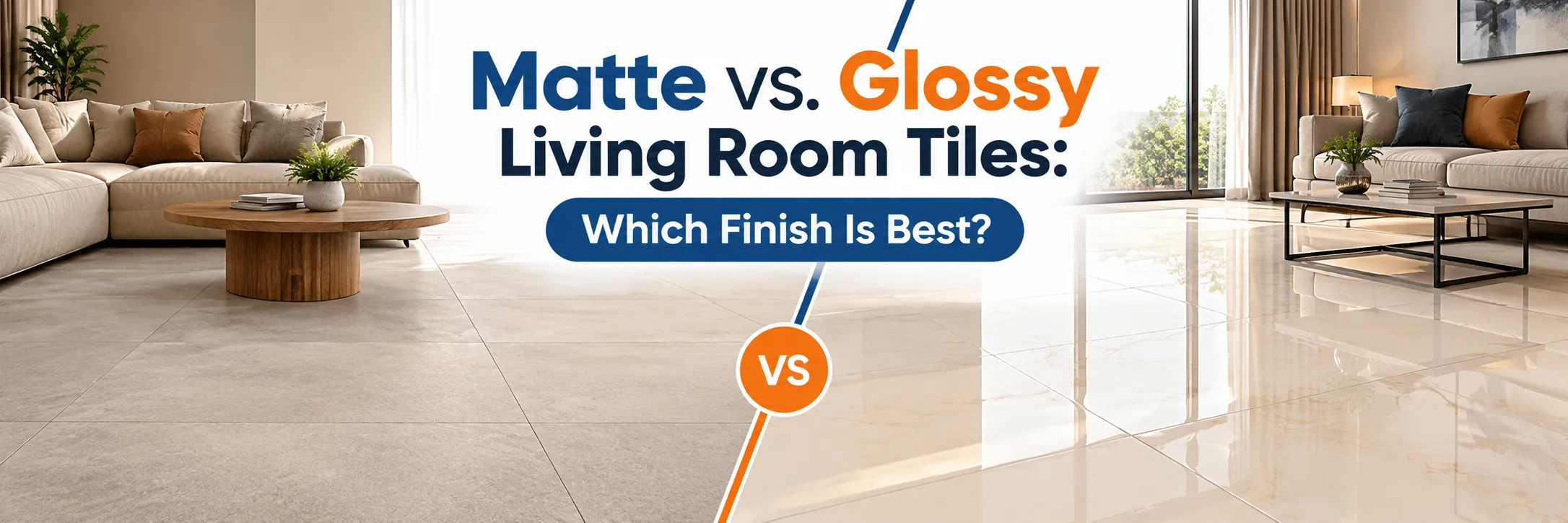
Choosing a finish is one of the first decisions in any living room project, and it affects far more than looks. The surface changes how light moves through the room, how often you notice marks, how the floor feels underfoot and how much effort upkeep takes. That is why the debate around Matte vs. Glossy Living Room Tiles comes up in almost every design discussion. The honest answer is that neither finish is best everywhere. This guide explains the differences in plain language, so homeowners, designers, builders and dealers can choose with confidence.
The difference starts at the surface. Glossy tiles have a smooth, shiny finish that reflects light and gives a polished, mirror-like look. Matte tiles have a softer, flatter surface that scatters light, so reflections are muted and colours look calmer.
In practice, glossy tiles are often chosen for formal, light-hungry rooms, while matte finish tiles tend to suit relaxed, everyday spaces. However, finish alone does not decide performance. The tile body, glaze, surface texture and manufacturing quality all play a part. So when you compare Matte vs. Glossy Living Room Tiles, read the product specification rather than relying on the finish name alone.
Matte living room tiles create a subtle, contemporary look and work especially well with stone, wood and concrete designs.
Benefits
Less glare. Helpful in rooms with large windows or bright downlights.
A calm, natural look. The soft surface feels warm and understated.
Forgiving appearance. Many matte designs hide light dust and footprints better, although colour and texture change the result.
Considerations
Heavily textured surfaces can trap dirt in fine grooves and may need a stiffer brush.
Matte does not automatically mean slip-resistant. Grip depends on the actual surface and its test results.
Very dark matte shades can still show dust and pet hair.
Glossy living room tiles bounce light around the room. In compact or dim spaces, glossy finish tiles can make the interior feel brighter and more open.
Benefits
Visual spaciousness. Reflections add depth, especially in smaller rooms.
Rich colour and pattern. Marble-look veining and deep colours appear sharper.
Smooth surface. Dust can often be wiped away quickly.
Considerations
Fingerprints, water spots and dust show up more clearly, particularly under strong light.
Reflections can feel harsh near large windows.
A glossy surface can feel slippery when wet, but actual slip performance varies by product, so check test data.
Reflections also reveal uneven surfaces, so careful floor preparation matters.
Importantly, glossy does not mean weak. A well-made vitrified tile can be durable in either finish, and wear depends on the specific product and how it is used.
|
Factor |
Matte |
Glossy |
|
Appearance |
Soft, natural, understated |
Shiny, reflective, polished |
|
Lighting |
Reduces glare and mutes reflections |
Reflects light; can brighten a room or cause glare |
|
Maintenance |
Smooth matte is easy to wipe; textured matte may need brushing |
Wipes easily but needs regular care to keep its shine |
|
Visible marks |
Often hides light dust and footprints |
Shows fingerprints, water spots and dust more readily |
|
Slip performance |
Varies by product; check test reports |
Varies by product; check test reports |
|
Design suitability |
Modern, rustic, minimal, stone-look and wood-look |
Formal, contemporary, marble-look and luxe schemes |
Use the table as a starting point. Real performance always depends on the specific tile.
Professionals rarely choose a finish in isolation. The best decision comes from matching the tile to the room, the client and the specification.
For architects and interior designers
Start with lighting. Rooms with strong daylight often feel more comfortable with matte, while dim rooms may benefit from glossy reflections. Then consider style. Tile finishes for modern interiors range from stone-effect matte to polished marble-look surfaces, so the finish should support the overall palette. For Matte vs. Glossy Living Room Tiles, the right call usually comes down to light, style and client lifestyle.
For builders and contractors
Ask for slip-resistance data before approving a product. The ANSI A326.3 standard, hosted by the Tile Council of North America, describes how dynamic coefficient of friction (DCOF) is measured and includes product use classifications. Its commonly cited wet benchmark for level interior floors is 0.42. You can read more on the TCNA’s DCOF resource page. Living rooms are usually dry, yet open-plan layouts, entrances and patio doors can bring moisture in. Also check substrate flatness, especially for glossy large-format tiles.
For dealers and distributors
Stock both finishes in your best-selling colours and sizes. Show samples under warm and cool lighting, because a finish looks different in a showroom than at home. Keep specification sheets ready, and train your team to explain trade-offs honestly. Clear guidance can reduce returns and build repeat business.
Use this checklist when weighing Matte vs. Glossy Living Room Tiles for a real project:
Check the light. Note how much natural and artificial light the room receives.
Think about traffic. Children, pets and frequent guests change what you will tolerate.
Match the style. Choose the finish that supports your furniture, colours and design theme.
Consider tile size. Large formats show reflections more, so glossy slabs demand a very flat base.
Review the data. Ask for slip-resistance and technical details for the exact tile.
Test a sample. View it under your real lighting, then wipe it and wet it.
Plan upkeep. Be honest about how often you will clean.
Consider mixing. A matte floor with a glossy feature wall can balance both effects.
The best tiles for living room floors fit the room’s light, traffic and style, and come with proper specifications. Matte finish tiles offer calm, low-glare surfaces, while glossy finish tiles bring brightness and polish. Ultimately, Matte vs. Glossy Living Room Tiles is a question of fit, not a contest with one winner.
When you are ready to explore vitrified tiles for living rooms, browse the Polagress Series, Pristine Series, Marbolux Series and Pioneer Series. Confirm each design’s finish and specification with the team before you decide.
Polagress Granito is a Morbi-based tiles brand with over 20 years of experience in designing, manufacturing and supplying tiles across India. The company operates its own manufacturing unit and factory outlet, and its website lists vitrified, porcelain and ceramic tiles with bulk order options. Its collections include large-format 1200 × 1800 mm (15 mm) tiles and 500 × 500 mm (12 mm) tiles.
If you are comparing Matte vs. Glossy Living Room Tiles for a project, the team can share product details to help you shortlist. You can also read more about the company.
Ready to shortlist? Architects, interior designers, builders, contractors, dealers, distributors and homeowners are welcome to explore the collections or send a requirement through the Contact page for product information.
Polagress Granito
Website: https://polagressgranito.com/
Email: polagressgranito@gmail.com
Phone: +91 9727878088 / +91 7353449911
